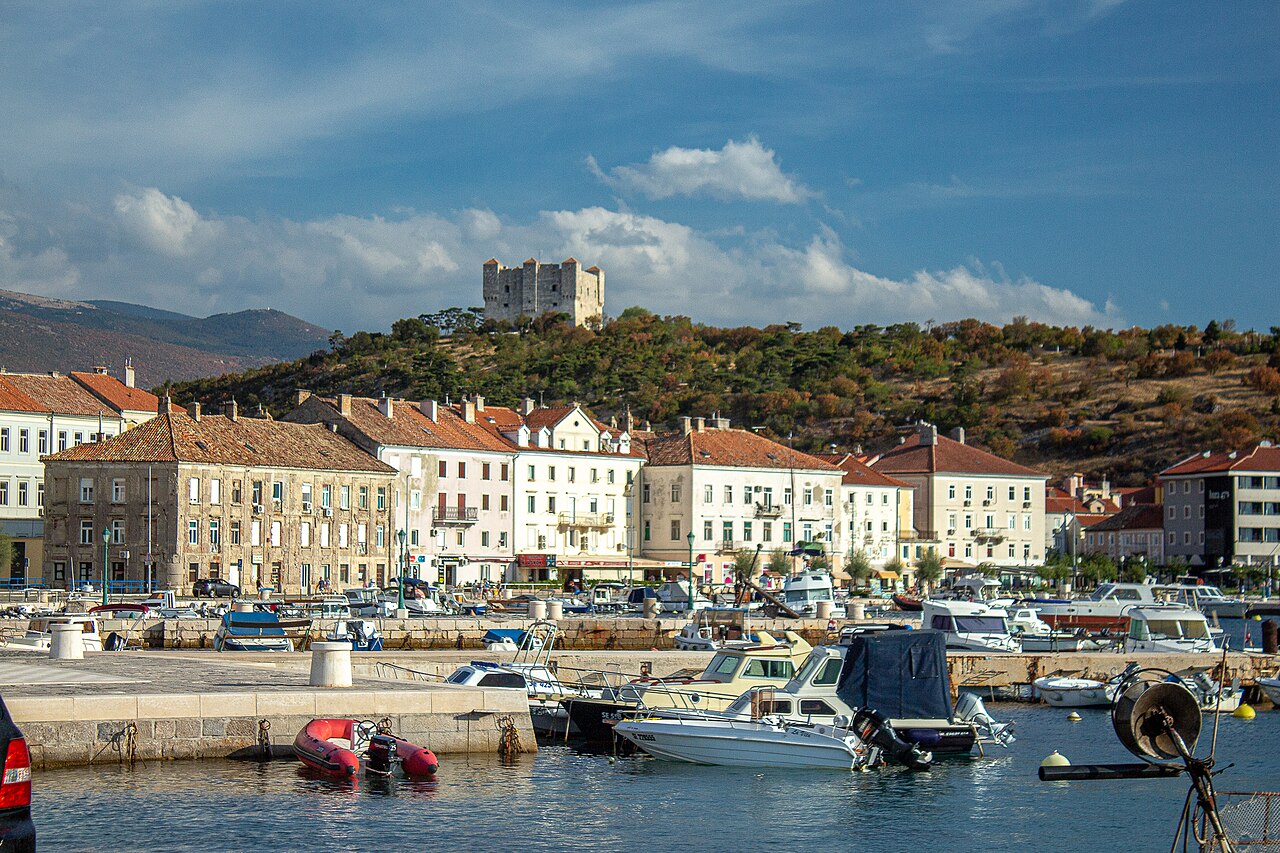
First, understand the shape
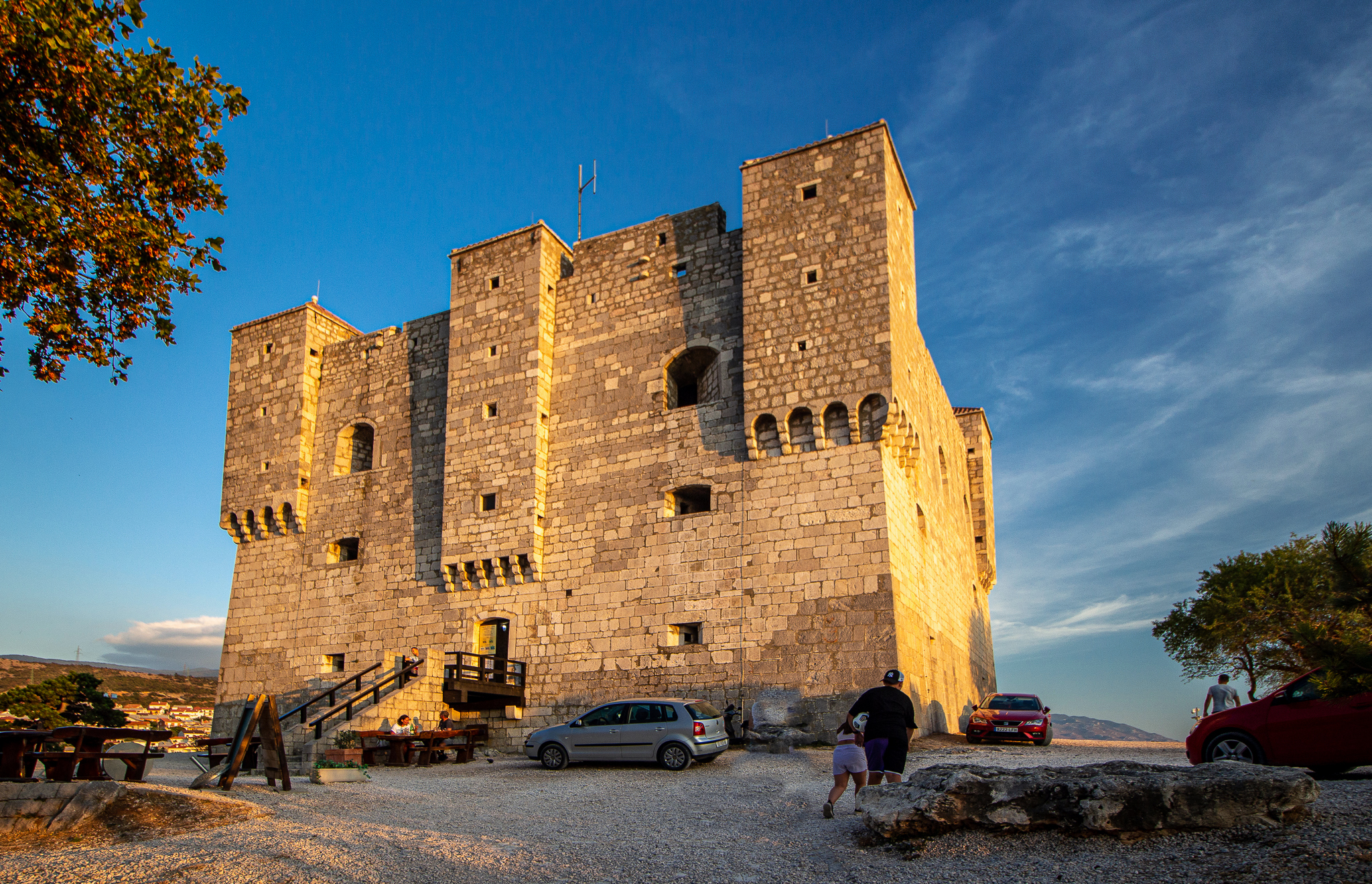
The museum describes a square fortress approximately 23 metres across and 18 metres high. Its walls are several metres thick, with narrow firing openings and larger embrasures for artillery.
Read these details together. The small openings, substantial masonry and controlled entrance belong to the same defensive idea. Nehaj was built to protect, not to display the openness of a palace.
At the centre: water and identity
Inside, the cistern or well draws attention to the practical needs of a garrison. Above it are three coats of arms associated with the fortress’s patrons and commanders.
Pause here rather than using the courtyard only as a passage. Water, stone and heraldry offer three different ways of reading the same place: daily life, construction and authority.

A building older than the fortress
The remains of the early Romanesque church of St George, dated by the museum to the 11th century, are visible at ground level.
This is an important change of scale in the story. The fortress was not the first structure to occupy this site; its interior also preserves traces of an earlier landscape.
What the museum brings into focus
The published displays cover the Senj Uskoks and coastal captaincy, the city’s churches through history, and civic and noble coats of arms. Check the operator’s current information for temporary changes.
Give the exhibitions time to explain the building. A cannon opening makes more sense when you have also considered who used the fortress and what the town below needed from it.
Finally, the horizon
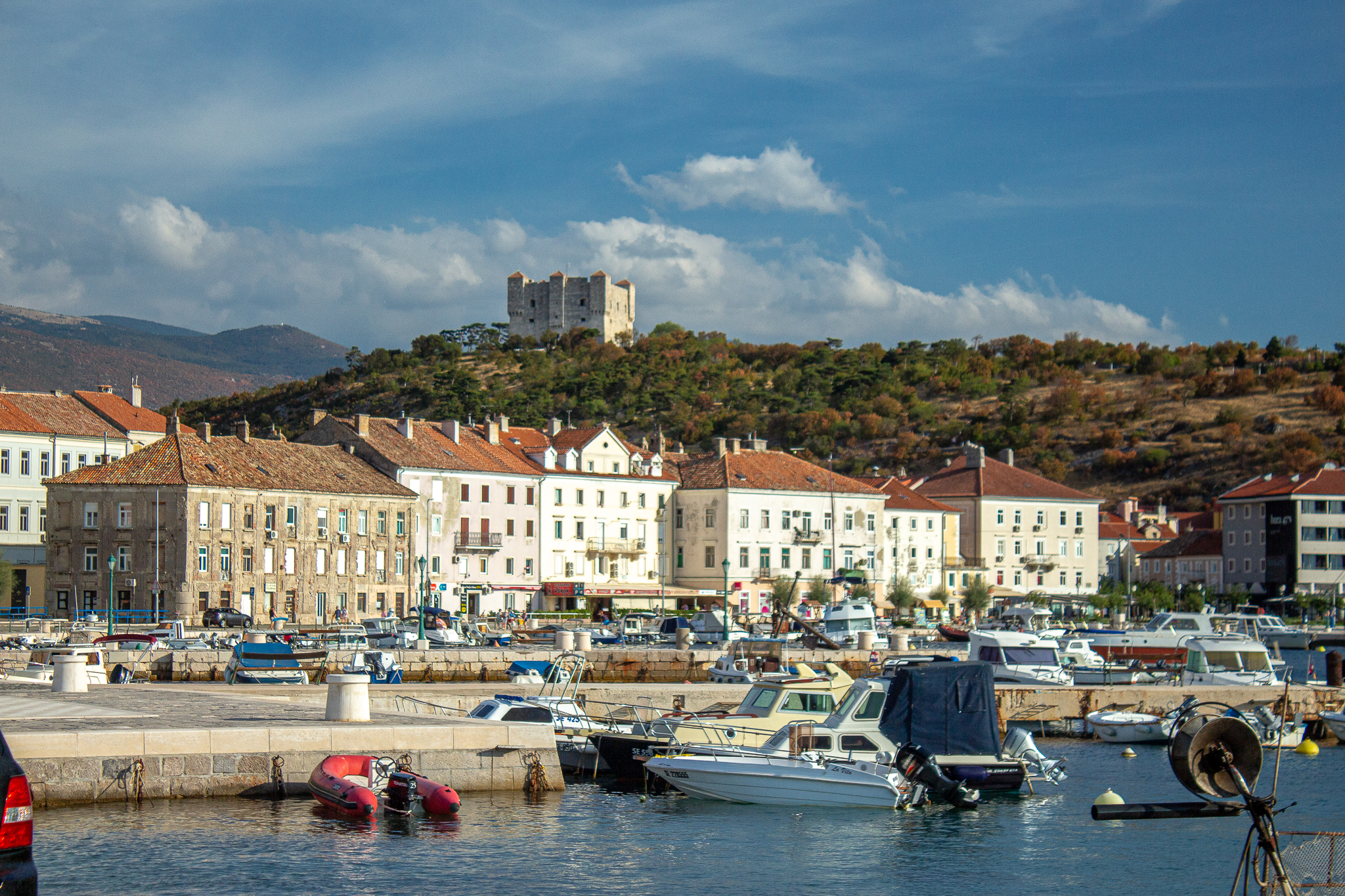
The upper lookout opens the story out to the coast and islands when access, weather and visibility allow. The museum identifies views towards islands including Krk, Prvić, Cres and Rab, as well as the surrounding mountains.
Do not treat a specific panorama as guaranteed. Choose clear conditions, follow the museum’s access instructions and leave the exposed upper areas when conditions are unsuitable.
Photography & credits



Sources & further reading
Sources checked · 20 September 2026